


Let’s be real—for a lot of students, math feels less like a useful skill and more like a final boss battle that they just can’t win. The classic image of a kid hunched over a dusty textbook, erasing a smudge for the tenth time, is enough to make anyone want to close the book and walk away. But here’s the thing: math isn’t actually about memorizing dry formulas or surviving “drill and kill” worksheets. At its core, math is about puzzle-solving, strategy, and logic.
That is exactly where educational games come into play. By shifting the focus from “getting the answer right for a grade” to “beating the level” or “solving the mystery,” games strip away the math anxiety and replace it with genuine engagement.
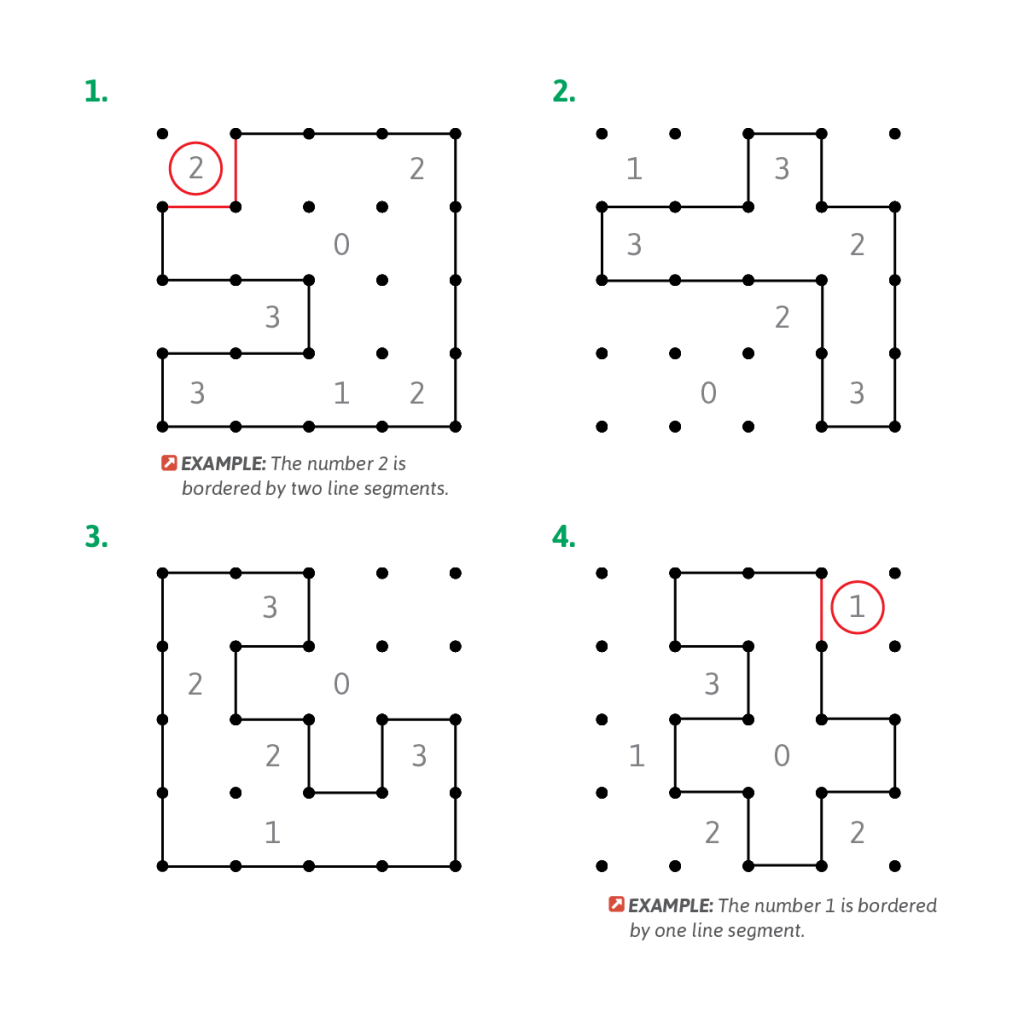
The Shift from Rote Memorization to Critical Thinking
Traditional math instruction often prioritizes speed and memorization. While knowing your times tables is helpful, it doesn’t necessarily mean you understand how to solve a complex, real-world problem. Games flip the script. When a student plays a strategy game that requires resource management, they are performing high-level subtraction, division, and forecasting without even realizing it.
They aren’t just “doing math”; they are navigating a system. This shift is crucial for SEO-minded educators and parents to understand because it builds a “growth mindset.” In a game, if you fail, you just hit “restart” and try a new strategy. That resilience is exactly what’s needed to tackle difficult word problems in a classroom setting.
How Games Break Down the Complexity of Word Problems
One of the biggest hurdles in math is the dreaded word problem. It’s the moment where numbers meet language, and many students get lost in translation. Educational games act as a bridge. Because games provide a visual and interactive context, the “problem” isn’t just a paragraph of text; it’s a tangible obstacle in a virtual world.
For example, if a player needs to build a bridge in a physics-based game, they are interacting with geometry and structural integrity. They see the angles. They feel the weight distribution. When they eventually encounter a geometry problem on paper, they have a mental framework to lean on. They can visualize the “why” behind the $a^2 + b^2 = c^2$.
—
Top Categories of Math Games That Actually Work
Not all math games are created equal. Some are just “chocolate-covered broccoli”—boring worksheets with a few pixels thrown on top. To truly help with problem-solving, you want games that fall into these categories:
Sandbox and Building Games
Games like Minecraft or Roblox (with the right modules) are secret math powerhouses. When a kid wants to build a castle, they have to calculate area, perimeter, and volume. They have to manage their inventory (addition and subtraction) and plan out the timing of their resource gathering. This is “active” math.
Logical Deduction and Mystery Games
These games focus on the “problem-solving” part of math. Players are given a set of clues and must use deductive reasoning to find the solution. This mirrors the process of identifying “givens” in a math equation and determining which operations are needed to find the “unknown.”
Resource Management and Simulators
Think of games like SimCity or even simple lemonade stand simulators. These teach kids about percentages, profit margins, and basic statistics. Understanding how a 10% tax affects their city’s budget is a much more vivid way to learn decimals than a page of long division.
—
The Role of Instant Feedback in Learning
In a typical classroom, a student might do 20 math problems, turn them in, and wait two days to get the results back. By then, the “learning moment” has passed. If they got the first step wrong on every problem, they’ve just spent an hour reinforcing a mistake.
Games provide instant feedback. If you calculate the trajectory wrong in an angry-birds-style game, the projectile misses immediately. You see the error, you adjust your “formula,” and you try again. This tight feedback loop is the fastest way to master problem-solving. It allows for “low-stakes failure,” which is the ultimate environment for learning.
Bridging the Gap Between Screen and Paper
A common concern is whether these skills actually transfer back to the classroom. The answer is yes, but it helps to have “guided play.” When parents or teachers ask questions like, “What was your strategy to beat that level?” or “How did you figure out how many blocks you needed?”, they are helping the student verbalize their mathematical thinking.
This verbalization is a key part of metacognition—thinking about how you think. Once a student can explain their logic in a game, explaining their logic in a math proof becomes much less intimidating.
Why Casual Gaming Environments Reduce Math Anxiety
“Math trauma” is a real thing. It’s that feeling of panic when a teacher calls on you and your mind goes blank. Games are the antidote because they are inherently “safe.” No one is judging you if you lose a life in a game; you just try again.
By placing math problems inside a casual, fun environment, the brain’s “fight or flight” response is deactivated. This allows the prefrontal cortex—the part of the brain responsible for logic and complex thought—to stay engaged. You can’t solve a hard math problem if you’re stressed, but you can solve a hard game level if you’re “in the zone.”
—
Conclusion
At the end of the day, math is a language used to describe the world. Educational games give students a chance to “speak” that language in a way that is natural, engaging, and genuinely fun. By moving away from the “right or wrong” mentality and moving toward a “explore and solve” approach, we can turn math from a chore into a challenge that students actually want to tackle. Whether it’s through building massive digital worlds or solving intricate logic puzzles, the future of math education is definitely in the hands of the players.
—
Frequently Asked Questions
Can video games really replace traditional math homework?
While they shouldn’t completely replace foundational practice, games are an incredible supplement. They are best used to build intuition and problem-solving strategies, while traditional practice helps with procedural fluency and speed.
How do I know if a math game is actually educational?
Look for games where the math is “baked into” the gameplay. If the game stops for a “math quiz” before you can keep playing, it’s less effective. If you have to use math logic to actually progress in the game, it’s a winner.
Are these games suitable for high school students too?
Absolutely. High-level games involve complex physics, structural engineering, and economic modeling. Many strategy and “tycoon” games require algebra and basic calculus concepts to optimize performance at higher levels.
Does screen time offset the benefits of the math learning?
Balance is key. Using educational games as a focused 20-30 minute “brain gym” session can be more productive than an hour of frustrated staring at a textbook. It’s about the quality of the engagement, not just the time spent.
What is the best way to start using games for math?
Start with “stealth math” games—ones that don’t even advertise themselves as educational. Focus on puzzle games (like Portal or 2048) or building games (like Minecraft). Once the student is engaged, you can introduce more specific curriculum-based tools.